

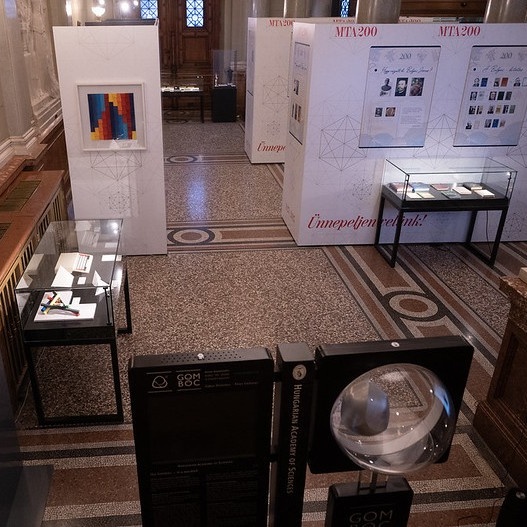
A Summary of Memorable moments from the Month of Mathematics at the Hungarian Acedemy of Sciences
Those who attended the January events of the Mathematics Month at the HAS were offered an insight into the scientific, community, and societal connections of mathematics. The programme ranged from historical overviews to the most up-to-date research questions, covering topics in computer science, computational mathematics, number theory, and operations research, and included film screenings, science outreach events, and panel discussions. With the conclusion of this diverse series, one clear takeaway is that mathematicians exchange ideas on calculations, theorems, and proofs with the everyday friendliness - and at times the gently grotesque humour - of ordinary life, even though without these very ideas many of the tools “non-specialists” rely on today would not exist, from mobile phones to digital applications, and automotive computing systems. Throughout January, leading and internationally recognised representatives of Hungarian mathematics offered an engaging glimpse of the very best of their vocation and into a discipline that continues to transform our everyday lives.
|
The programme series opened with a spectacular exhibition that offered an immersive, interactive insight into the development of Hungarian mathematical thinking and the world-renowned achievements of Hungarian mathematicians, complemented by everyday objects, documents, and accompanying films. Visitors could, for example, see the typewriter of László Fejes Tóth, on which he wrote the manuscript of his famous monograph Lagerungen.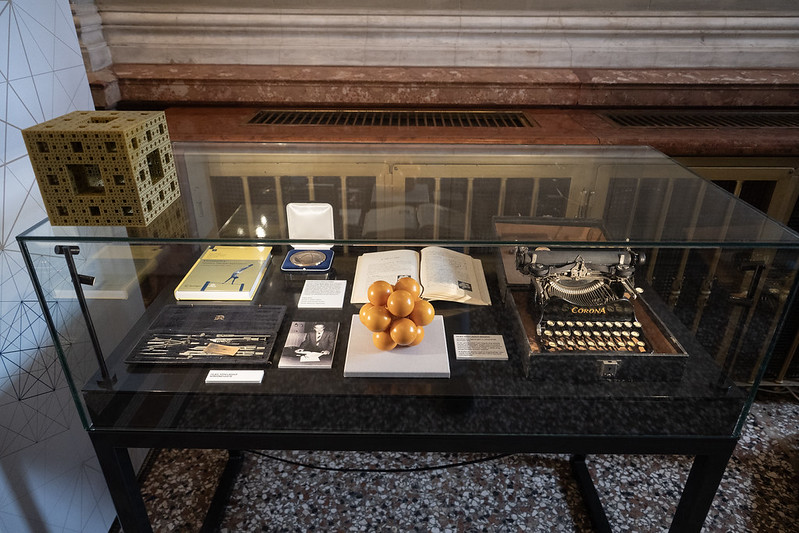
As part of the exhibition, Primo - an early computer of significant historical value from the formative period of Hungarian computer science - was also on display. Visitors were further welcomed by physical installations such as a double pendulum demonstrating chaotic motion, the oscillating geometric form known as the oloid, and the well-known Gömböc, the unique geometric object with only one point of stable equilibrium. 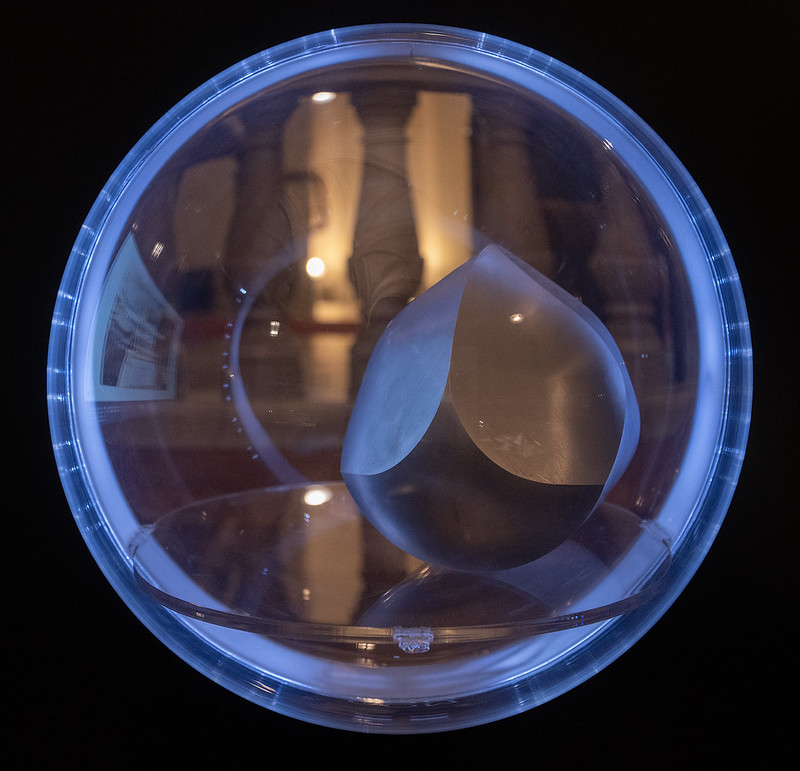
Photos taken at the exhibition opening can be viewed HERE.
The event entitled “Artificial Intelligence from a Mathematical Perspective” explored the mathematical foundations and limitations of AI. 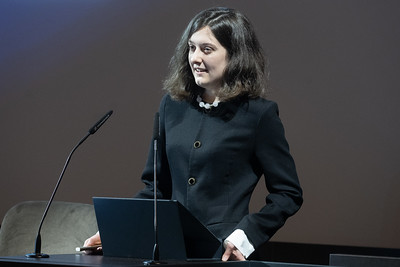 The lectures highlighted the theoretical results that have enabled the development of artificial intelligence, as well as the questions - many of them still open - that currently occupy researchers in the field.
We wrote about the event HERE; on-site photos can be found HERE, while the first and second parts of the video are available HERE and HERE.
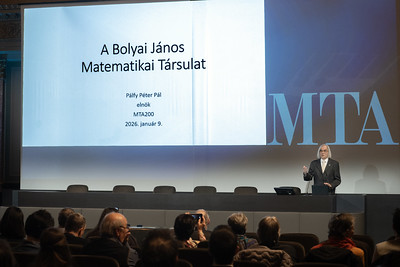
Mathematical talent development was given a dedicated event by the Section of Mathematics. On January 9, the programme “The Mathematical Society and Mathematical Talent Development” featured a series of lectures focusing on the community-building and talent-nurturing role of mathematics. Topics included the history of the János Bolyai Mathematical Society, the finest traditions of Hungarian mathematical talent development, and the importance of the International Mathematical Olympiad (which Budapest will host in 2027) and other prestigious competitions in shaping the careers of young talents. We wrote about the topic HERE; photos are available HERE, and videos can be viewed HERE and HERE.
On January 19, a panel discussion addressed the European Research Council (ERC) mentoring programme. Participants gained insight into how and from whom they can seek support or mentoring when preparing to submit an ERC grant application, and heard first-hand about the experiences of the Rényi Institute.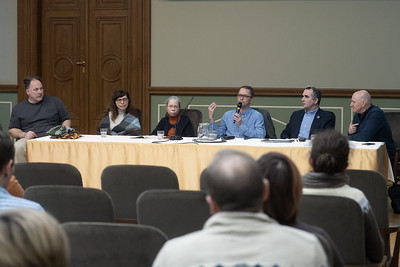 Our compilation featuring exclusive interviews with director of Rényi András Stipsicz and Miklós Abért can be read HERE; photos from the event are available HERE, and the video can be viewed HERE.
On January 21, the programme “Snapshots from the Past Two Centuries of Hungarian Mathematics” offered a comprehensive overview of Hungarian mathematics—from the two Bolyais through internationally renowned mathematicians of the 20th century to the still-active, school-forming figures of Rényi Institute and their successes at the international forefront. Alongside historical curiosities, the audience also encountered exciting mathematical theorems and ideas. Videos from the event can be viewed HERE and HERE, and photos are HERE.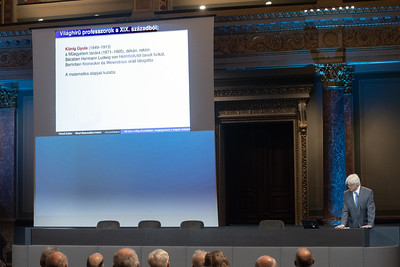
At the January 22 event of the Mathematical Scientific Committee, major questions in number theory and analysis took centre stage. The programme presented both classical, still unsolved problems and modern methods, while also evoking the intellectual legacy of Pál Erdős. Videos (five parts in total) are available starting HERE, and photos can be found HERE.
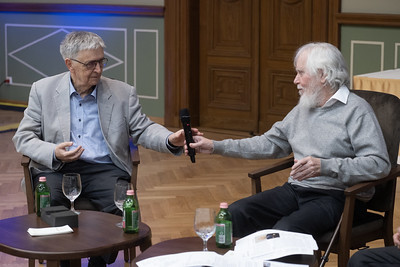
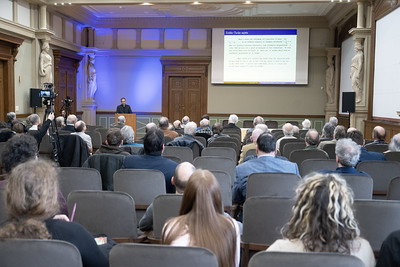 On January 28, visitors to the Grand Hall were able to attend a special conversation. Two legendary mathematical figures, Abel Prize laureates Endre Szemerédi and László Lovász, shared exceptional moments from their professional and personal lives. The event “On the Abel Prize with Abel Laureates” offered a rare opportunity for the audience to gain insight into the thinking and key career milestones of two world-famous researchers. Photos from the event are available HERE, and the video can be viewed HERE. The film by András Kepes about Endre Szemerédi, screened on site, can be watched again HERE
 The Month of Mathematics concluded on January 29 with the lecture “The Development of the Concept of Three-Dimensional Space from the Bolyais to Perelman” by András Stipsicz. The talk traced the evolution of geometric spatial thinking from Euclid and János Bolyai through Poincaré, and - one century later - to the work of Perelman.
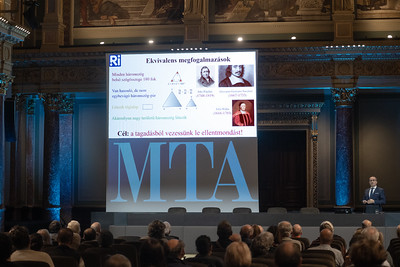 Through anecdotal stories and vivid analogies, audience members were able to follow how our understanding of the space around us has transformed over time. Photos from the closing lecture can be found HERE, and the video is available HERE.
We also reported HERE on the inaugural lectures of the newly elected corresponding and full members of the Section of Mathematics of the Hungarian Academy of Sciences; links to the related visual materials are included in that article.
(Photos and videos courtesy of mta.hu)