

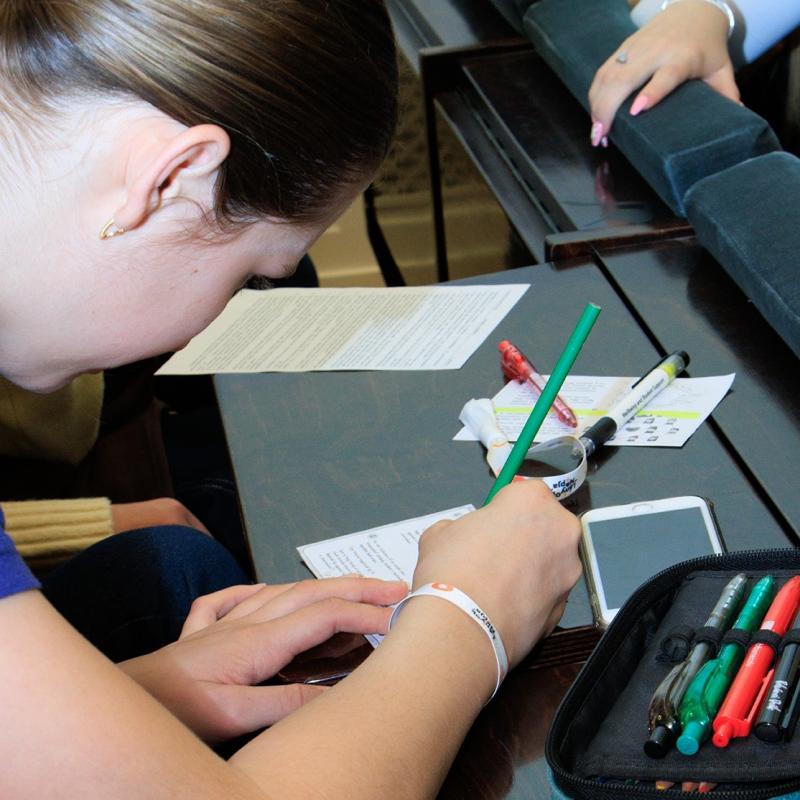
Curiosity, creativity, and logic came together to bring the world of mathematics to life at this year’s Girls’ Day programs at the Rényi Institute.
Participants had the chance to ask questions, share their opinions, and engage in informal hallway conversations with young researchers who are closely connected to Rényi both professionally and personally, and who already have significant achievements despite their young age. Alongside three insightful, practice-oriented, and accessible talks and sessions, interactions were a key part of what awaited visitors at the Institute’s now traditional National Girls’ Day event. Of the roughly 40 participants who spent the first half of their day with us, most attend secondary schools in Budapest, while several also arrived this year from the surrounding areas.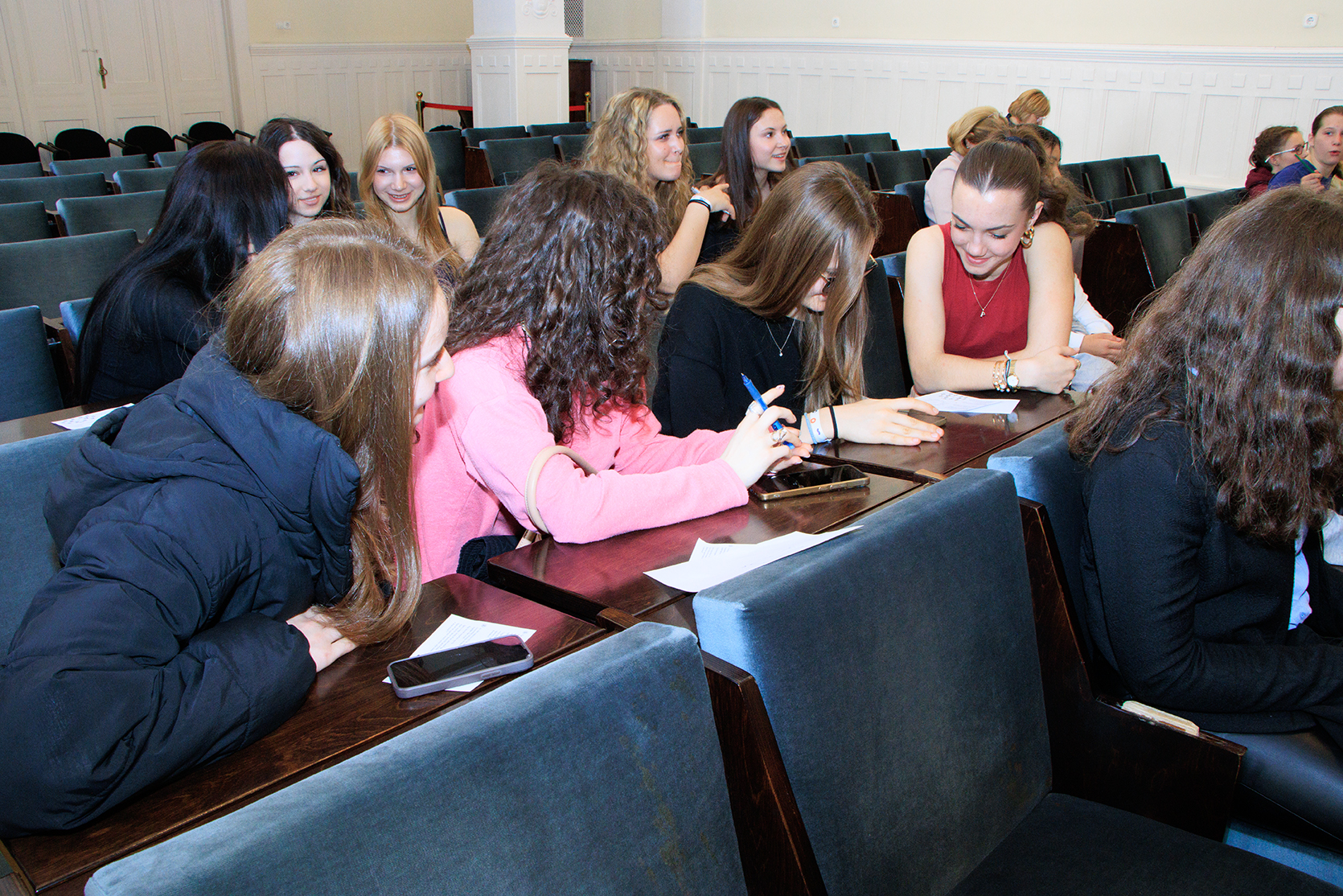
Today, nearly 200 researchers work here – including world-renowned mathematicians and two scientists who have received the Abel Prize, often referred to as the “Nobel Prize of mathematics”: professors and academicians László Lovász and Endre Szemerédi. Many of the Institute’s researchers spend shorter or longer periods working abroad, while we also regularly host visiting scholars. As Deputy Director General Márta Szomolányi pointed out in her welcome address, this is a place where colleagues think every day about ways of better understanding how the world works – not through experiments or microscopes, but through numbers, patterns, and logic. She also emphasized that mathematics is not “just for boys” – on the contrary, it is a field well worth pursuing for girls as well.
“Why is mathematics a good choice for girls and women?” she asked, offering several answers that come naturally to those familiar with the atmosphere at Rényi:
-“You can solve real problems. Mathematics is not just about calculation. It helps us understand the spread of epidemics, the functioning of social networks, or even artificial intelligence.
- It’s a creative field. Surprisingly, mathematics often resembles a puzzle or even an art form more than ‘dry calculation.’
- Strong career opportunities. Mathematical thinking is valuable in many areas: IT, finance, research, data analysis, and artificial intelligence.
- An international environment. If you are curious about the world, mathematics is a ‘common language’ you can use anywhere.
- There is a shortage of women professionals. This means you are truly needed, and you can have a real impact.”
Throughout history,and today as well, there have been, and are, many outstanding mathematicians, who are women and who have fundamentally shaped the field. At Alfréd Rényi Institute of Mathematics, there are currently 24 female researchers, while more and more women are choosing this career path. “If you enjoy logical challenges, recognizing patterns, or are simply curious about how our everyday world works beneath the surface, then mathematics is for you,” she advised the teenage participants.
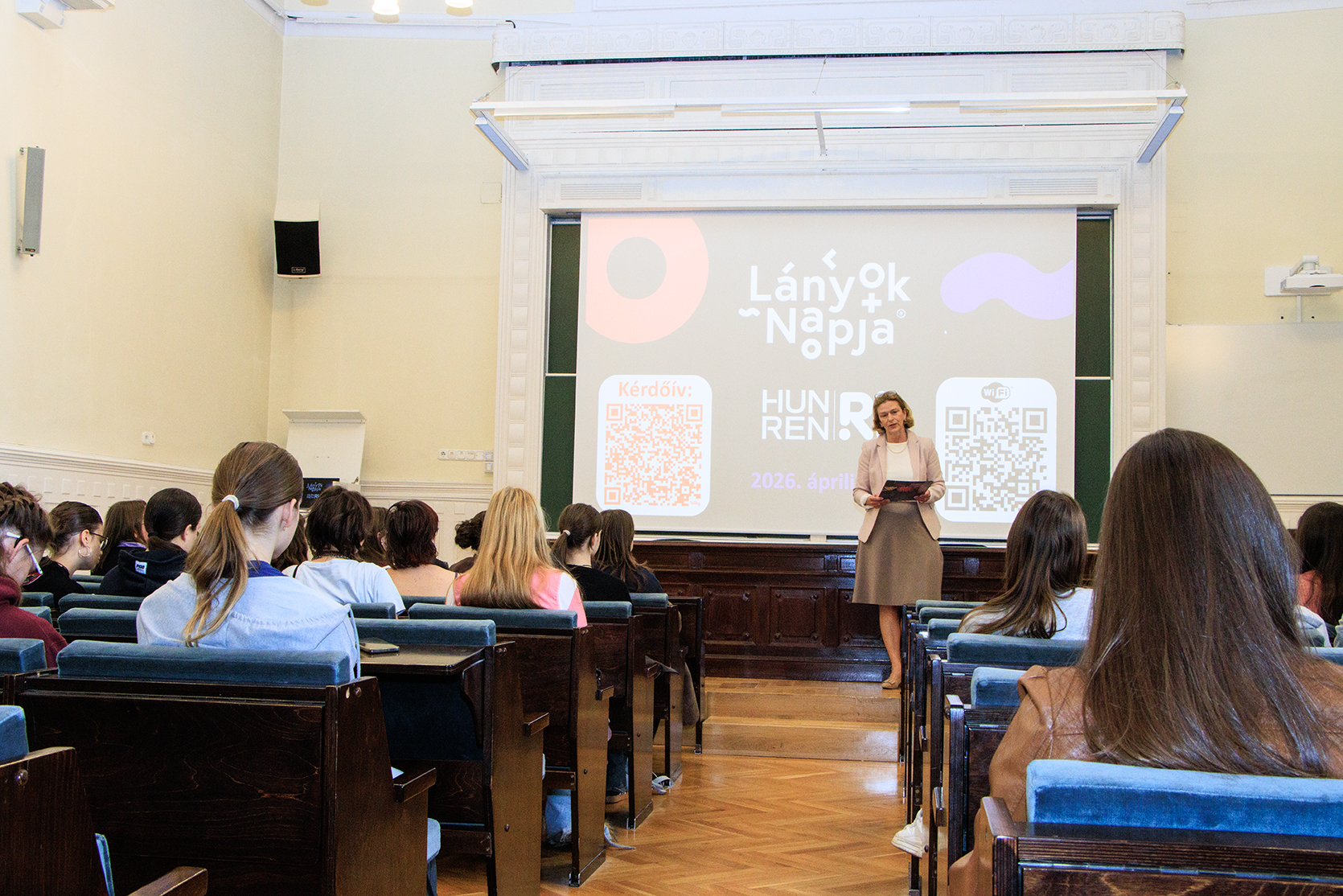
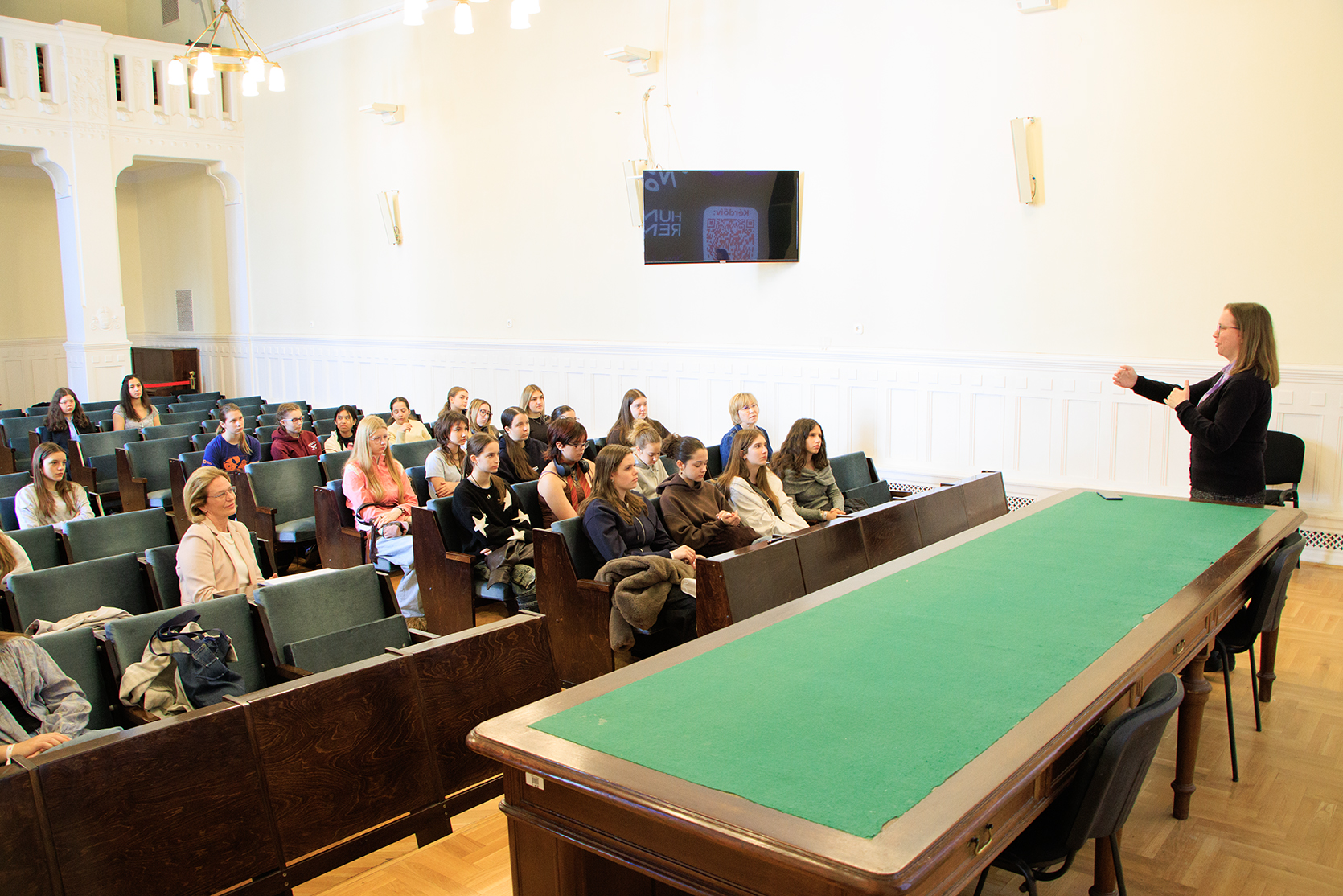
The first talk was given by Ágnes Backhausz, a research fellow in the Artificial Intelligence Department of the HUN-REN Alfréd Rényi Institute of Mathematics, titled “What is it like to be a female mathematician?” She also shared some of her personal experiences, offering the audience a number of interesting, and at times surprising,insights.
Here are a few snapshots capturing the atmosphere at the start of the day:
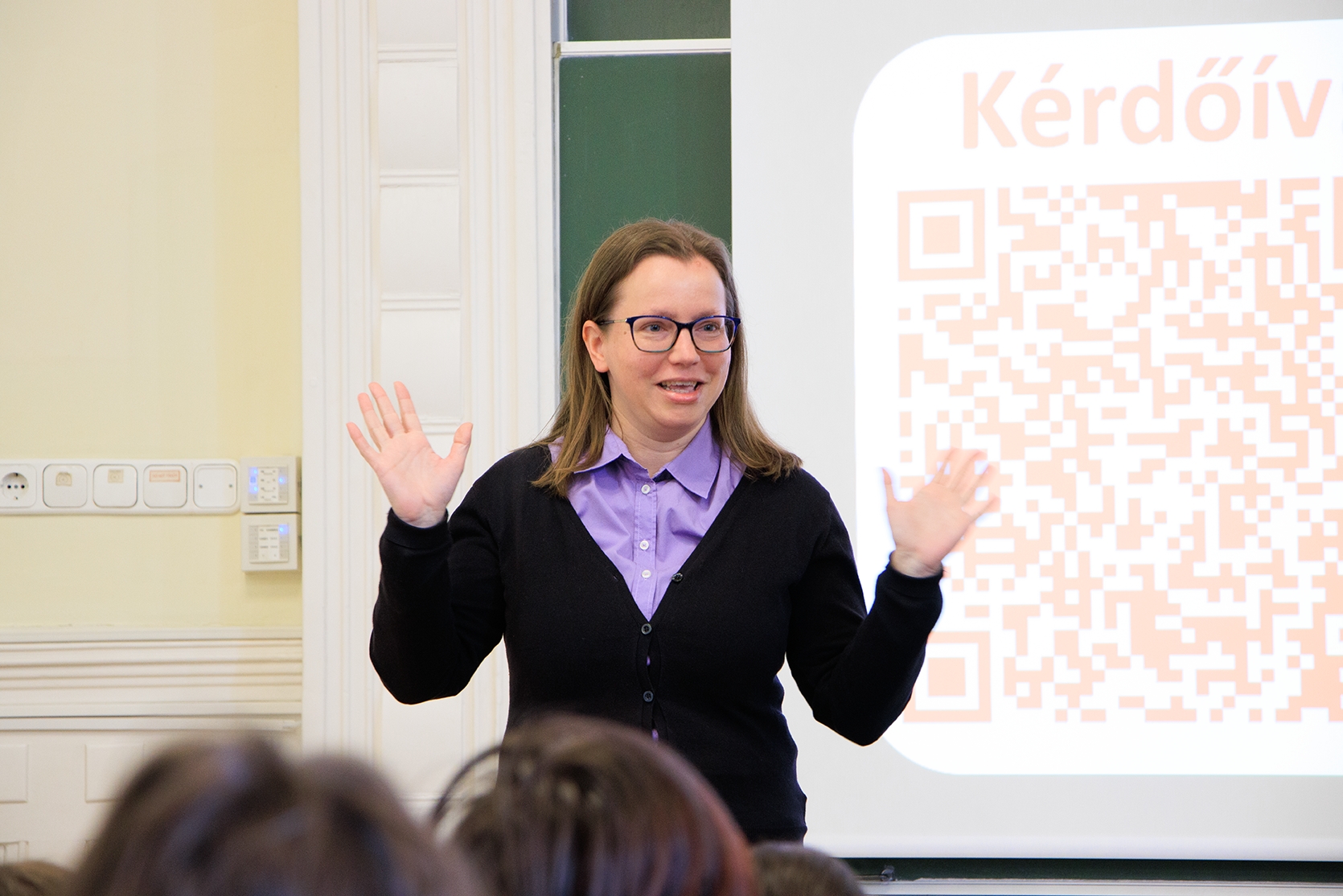
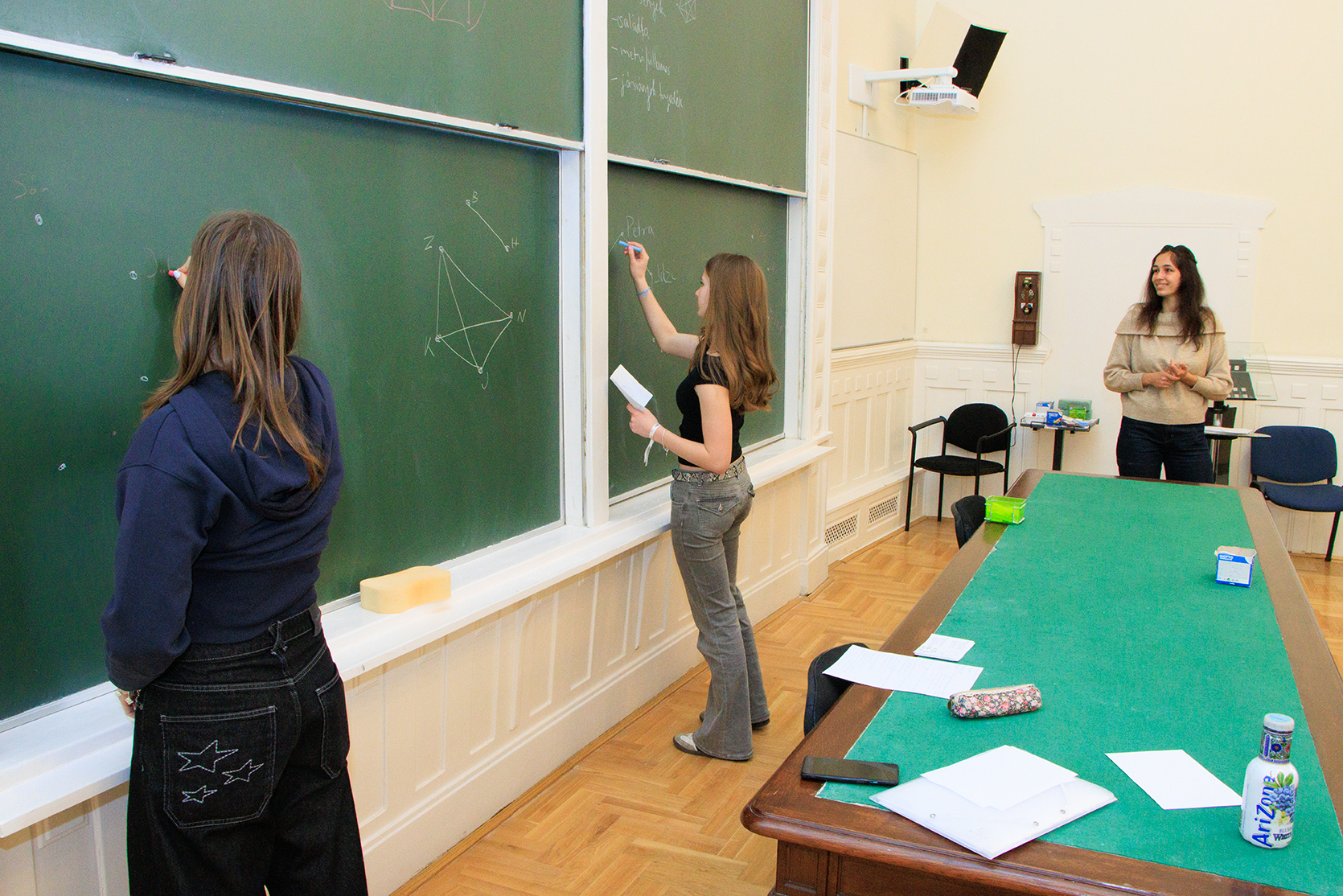
At the next interactive session, the participants met Nóra Almási, a researcher at the Alfréd Rényi Institute of Mathematics who works in combinatorial geometry and graph theory. In smaller groups, the girls mapped out their friendships and relationships.
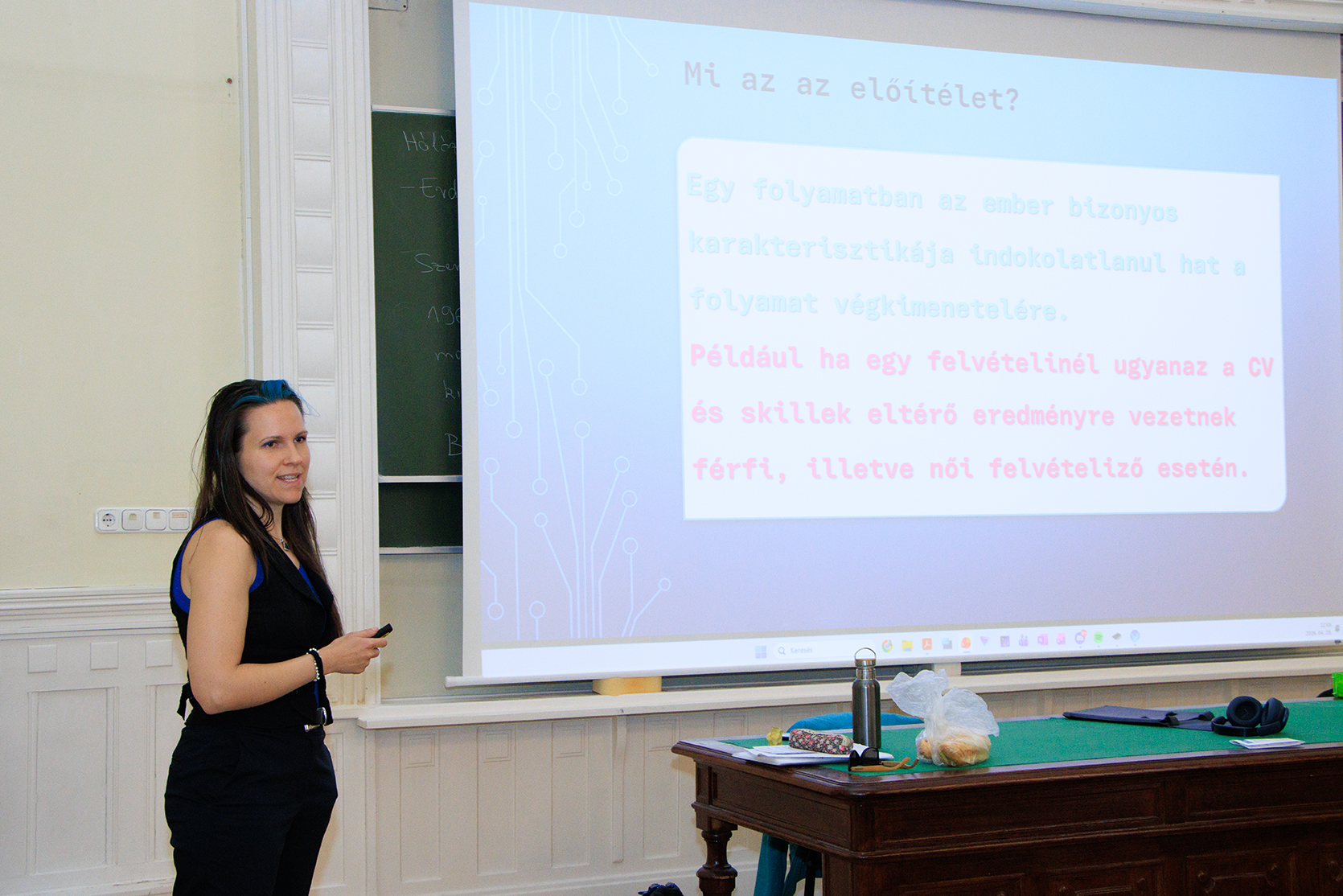
After lunch, Gabriella Keszthelyi gave a talk titled “Women in Statistics – Statistical Biases, or What Is the Gender Data Gap?”. This latter term refers to the fact that in many fields, less or lower-quality data is available about women than about men. This lack of data can lead to biases in statistical analyses: for example, a significant portion of medical research or even labor market models are often based primarily on data collected from men. As a result, women’s needs and experiences are less reflected in decision-making. Those attending could see that such biases could be avoided but addressing them required conscious data collection, representative samples, and more sensitive analytical methods. Gabriella is the author of the popular book “What Color Is Probability?”, which has already appeared in three editions, and she is affiliated with both the Hungarian Academy of Sciences and the Budapest University of Technology and Economics.
The Institute continues to welcome and encourage teenage girls (and boys) to visit Rényi before taking their first steps in choosing a career path (for example, before applying to higher education), and to discover “the vast and exciting universe of mathematics,” as well as Rényi Institute whose researchers regularly publish in the world’s leading scientific journals, organize international conferences, and the Institute has also been awarded the European Union’s “Centre of Excellence” title.
Moreover, in recent years, Rényi researchers have received an outstanding number of prestigious research grants, including 13 ERC grants.
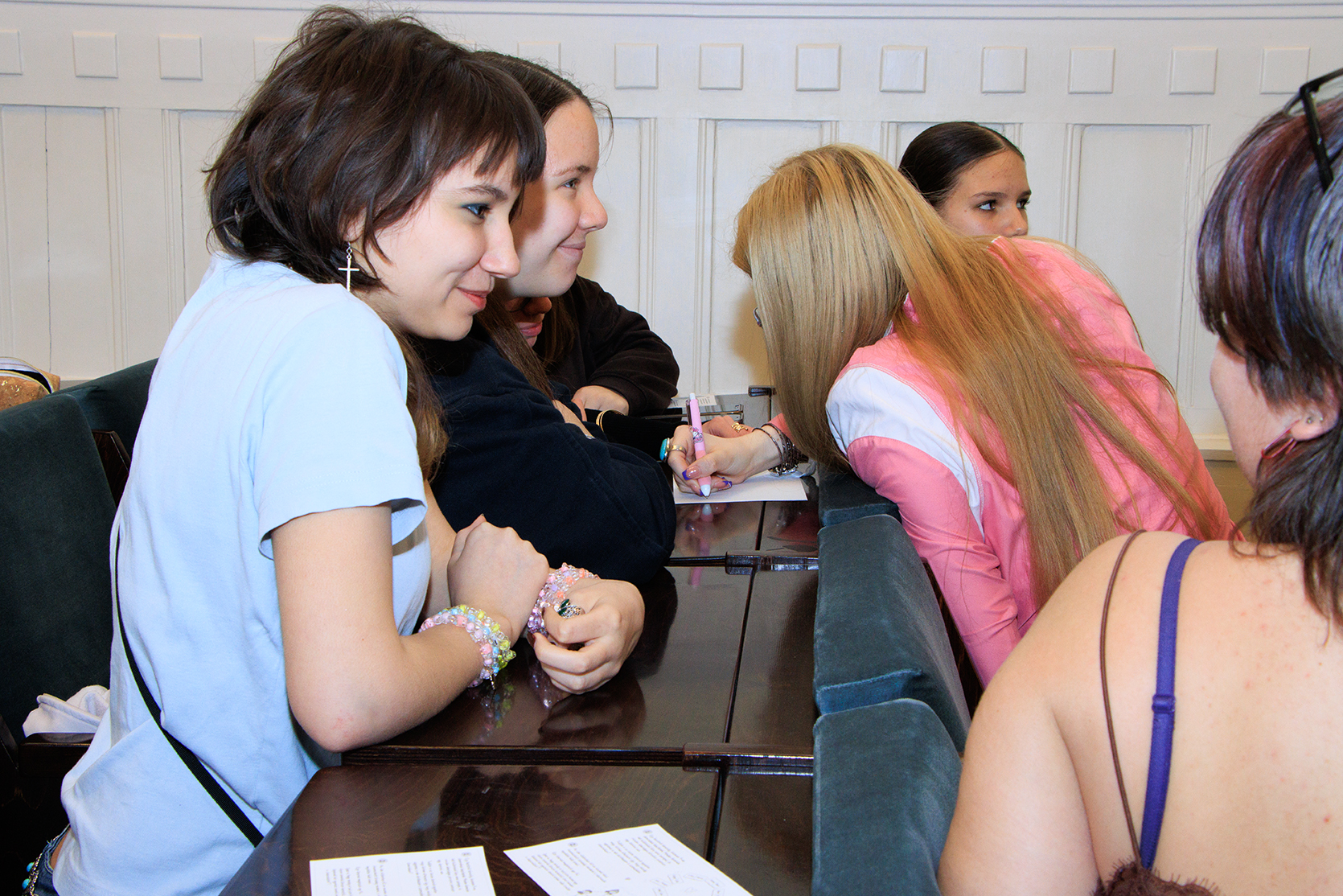
Photos were taken by Gergely Szilágyi.